.22 Creedmoor vs .22 ARC vs .22-250 vs .223 for Texas Whitetail: What's Ethical and When to Step Up
Small calibers can kill Texas deer cleanly — with the right bullet, twist and shot. Here's where each one works and when it's time to move up.
Native Industries ·
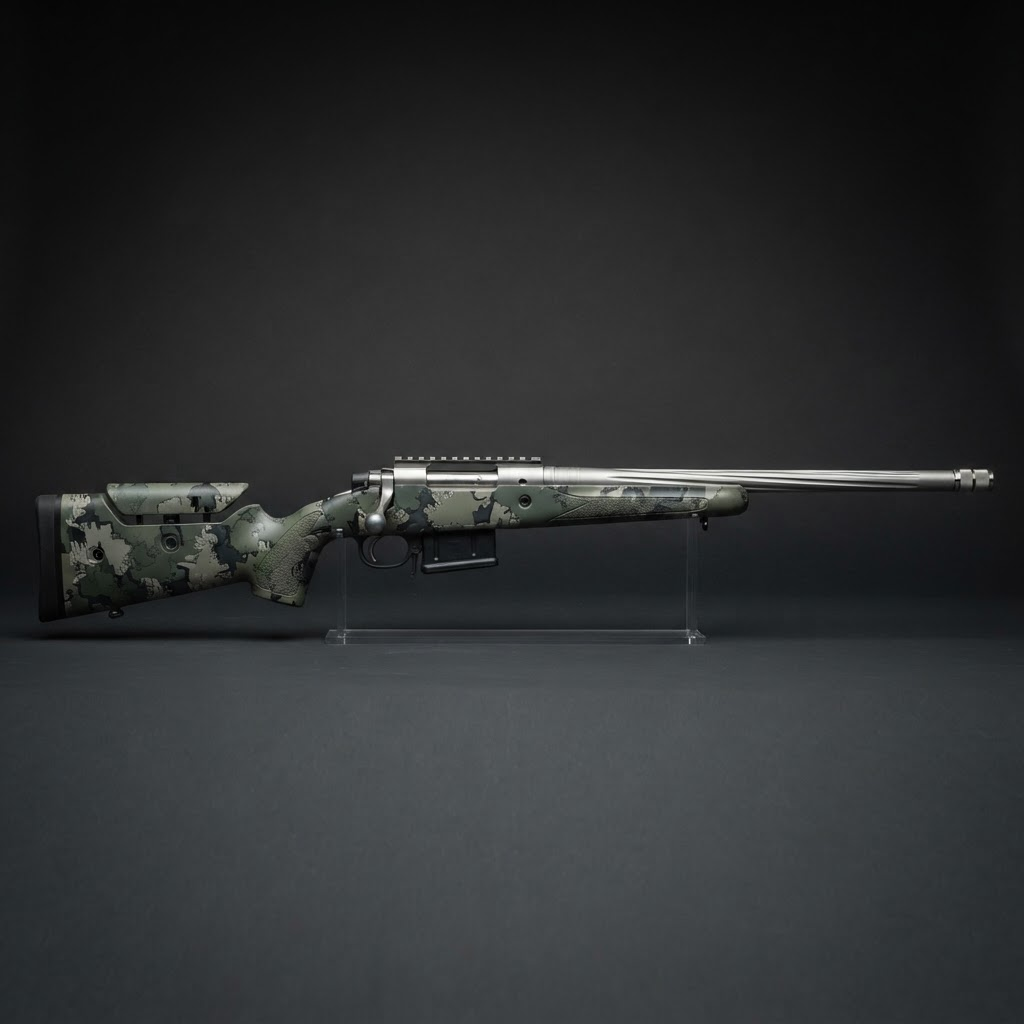
Texas hunters have taken whitetail with .22 centerfires for generations. In Texas, deer have to be taken with a centerfire cartridge — rimfires aren't allowed — but there's no minimum caliber beyond that. So the question isn't whether it's legal. It's whether it's ethical for your hunt.
The answer comes down to three things: the bullet, the twist rate and the shot.
The bullet matters most. A thin-jacket varmint bullet is built to come apart on a coyote. On a deer's shoulder it can blow up on the surface and leave a wounded animal. For deer, use a bonded or monolithic hunting bullet made for big game, usually 62 to 88 grains.
The twist decides which bullets you can shoot. Heavy hunting bullets are long, and long bullets need a fast twist to fly straight. A 1:7 or 1:8 twist handles them. A slow 1:12 or 1:14 twist won't.
Now the four cartridges.
The .223 Remington. With a 62 to 64 grain bonded bullet, it starts near 3,000 feet per second. It works on deer inside about 200 yards with a broadside heart-lung shot. Recoil is almost nothing, which is why so many kids take their first deer with one.
The .22-250 Remington. It's fast, but most .22-250s have a 1:14 twist built for light varmint bullets. That limits you to bullets around 55 to 64 grains. With a 1:8 twist, it can shoot heavier hunting bullets and stretch farther. With the standard twist, treat it like a hot .223 and keep shots inside 200 to 250 yards.
The .22 ARC. It shoots heavy 75 to 88 grain bullets with a great shape, but from a modest case. From a 20 inch barrel, the 88 grain starts around 2,650 feet per second. It's a solid 250 to 300 yard deer cartridge with the right bullet.
The .22 Creedmoor. This is the most capable of the four. From a 20 inch barrel, an 88 grain bullet starts around 3,100 feet per second and still carries about 1,030 foot-pounds at 425 yards on our numbers. That's the farthest-reaching small-bore deer cartridge here by a wide margin.
What's ethical. Energy guidelines like 1,000 foot-pounds are a rule of thumb, not a law, and shot placement matters more than any number. With any .22, our rules are simple: broadside or slightly quartering away, heart-lung or neck only, no shoulders on quartering animals, and only inside the distance you've proven on paper.
When to make the jump. Step up to a 6mm, 6.5 or .308 class rifle if any of these are true: Your shots regularly go past 250 yards and you shoot a .223 or .22-250. You hunt big-bodied South Texas bucks, where a 200 pound deer is normal. Hogs show up in the same blind. Hog shields are tough on small bullets. You hunt from places where you can't wait for the perfect broadside shot. You're still building your shooting skills and want more margin for error.
A small caliber in skilled hands with the right bullet is a clean killer. A small caliber with the wrong bullet, or the wrong shot, is how deer get wounded. If you're not sure where your hunt lands, run Help Me Choose — it checks energy at your actual distance and tells you when to step up.